

Breaking The Convention! Best Trail Cameras In The Market
April 29, 2026
Disclaimer: The observations and opinions presented in this article are based solely on our personal field experiences, deployment conditions, and use cases. Trail camera performance can vary significantly depending on habitat, climate, settings, maintenance, target species, and individual units. This article is not intended as a definitive product review or technical evaluation, and other users may have different experiences with the same equipment.
For decades, one name has dominated the camera trapping world: Cuddeback. Among many senior researchers and wildlife biologists, Cuddeback became the default choice, not necessarily because it was the best available option, but because it was the camera that everyone used. Over time, it became less of a product choice and more of a tradition. New generations of researchers inherited the same preference, often without exploring what the rapidly evolving trail camera market had to offer.
Today, however, the landscape has changed dramatically. Brands such as Solaris, WoSports, Browning, Stealth Cam, and even Indian manufacturers like Anusha have introduced cameras that often outperform conventional models while costing significantly less. Yet despite these advancements, many users continue to rely on familiar names simply because they have always been part of wildlife research.
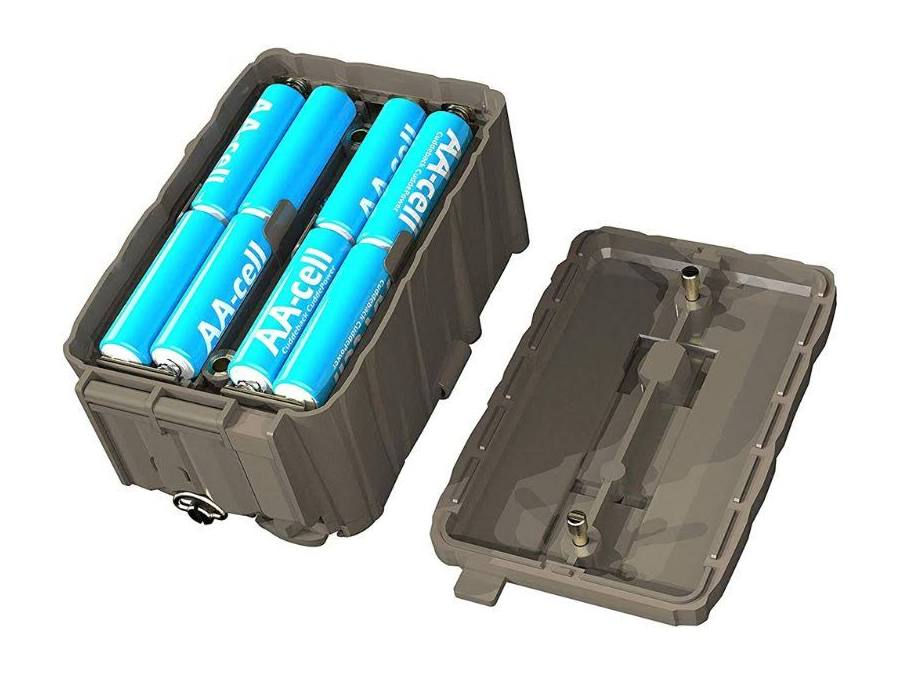
Our experience with Cuddeback has been a mixture of admiration and frustration. There is no denying that the camera is rugged and capable of withstanding harsh field conditions. Its build quality has earned its reputation over years of use in some of the most demanding environments. However, when examined objectively, several shortcomings become apparent. The user interface feels dated and unintuitive compared to modern alternatives. The battery compartment can be frustratingly sensitive, often requiring precise tightening and placement to function reliably. More concerning is the camera's relatively narrow trigger angle of approximately 50–55 degrees, a specification rarely highlighted in promotional materials. In practical terms, animals can easily pass through the periphery of the camera's field of view without triggering an image. For a camera priced around ₹22,000 - ₹26,000, this limitation is difficult to overlook. Storage flexibility is another weakness, as Cuddeback supports SD cards only up to 64 GB, which can become restrictive during long-term deployments or video-based studies.
The technology itself also feels dated. Cuddeback continues to rely on older flash and infrared systems while offering video quality that records at 720p and is stored at an even lower resolution. Battery performance is another major concern, with deployments often lasting only four to eight days in photo mode under active field conditions. Despite its reputation, we believe the modern market now offers several stronger alternatives at similar or even lower price points.


One of the most prominent competitors is Browning. Priced similarly to Cuddeback, Browning offers noticeably better image and video quality, recording in full HD 1080p. Its infrared illumination system is among the best we have tested, producing exceptionally clear and evenly lit night footage. In habitats where animal movement is concentrated along trails, game paths, or forest tracks, especially rainforests, Browning consistently performs well. The camera also delivers quite better battery life, often operating for five days or less during peak summer conditions and extending to nearly two weeks during cooler seasons when deployed in video mode. The software interface is the best in the market. Browning also supports SD cards up to 128 GB, allowing substantially larger storage capacity than Cuddeback and making it more suitable for extended deployments.
However, Browning is not without its own limitations. The field of view is relatively narrow compared to newer wide-angle models, restricting its effectiveness for monitoring open areas or den complexes of smaller mammals. We also encountered recurring issues with battery trays, which proved surprisingly delicate despite careful handling. Perhaps the most frustrating flaw appears when storage cards become full. Depending on the configuration, footage can become difficult to retrieve, sometimes requiring data recovery software to access files. Nevertheless, for researchers focusing on large mammals moving along predictable routes, Browning remains a dependable option, albeit an expensive one, with premium models ranging between ₹26,000 and ₹29,000.


If Browning represents the premium end of the market, WoSports represents perhaps the greatest surprise. Few cameras have challenged our assumptions as dramatically as the WoSports series. Costing roughly one-fourth to one-third the price of a premium Cuddeback or Browning unit, models such as the G300, G500, and G600 offer an astonishing combination of performance, battery life, and versatility.
The first thing that stands out is the 120-degree wide-angle lens. This feature alone transforms how the camera can be deployed. Traditional cameras often struggle to monitor complex den systems or wide waterholes, forcing researchers to deploy multiple units. WoSports can frequently achieve the same coverage with just a single camera. For species such as wolves, foxes, porcupines, and other denning mammals with multiple entrances and exits, the wide field of view is invaluable. Similarly, when monitoring waterholes, the camera is capable of capturing nearly the entire area within a single frame.
The camera also records in 4K resolution and incorporates side-mounted motion sensors that detect approaching animals before they enter the primary field of view. Battery performance has been extraordinary in our deployments. During one field season, a WoSports camera remained operational for nearly three months while recording in 2K video mode. Such longevity dramatically reduces field visits and battery replacement costs. The camera is fully waterproof and has proven highly reliable in diverse weather conditions. Storage capacity is one area where WoSports still has some limitations. Older models support SD cards only up to 32 GB, while newer versions support up to 64 GB. Although sufficient for many projects, this can become restrictive when recording large volumes of high-resolution video.
Its infrared illumination does not quite match Browning's outstanding night performance, and both Browning and WoSports share an automatic low-battery mode that shortens night recordings when battery levels decline. Yet considering its price point of approximately ₹5,000 - ₹6,000, these compromises are remarkably minor. The only significant challenge is availability, as WoSports cameras are not officially sold in India and must typically be imported through private channels or overseas contacts.


Among all the cameras we tested, however, one model consistently stood out above the rest: Solaris. It is, without question, our personal favourite and perhaps the most innovative trail camera currently available within its price range.
What immediately distinguishes Solaris is its integrated solar charging system. Unlike many solar-powered devices that require direct sunlight to remain functional, the Solaris panel continues to harvest enough energy even in partially shaded conditions. During our testing, a single unit remained deployed for four months while recording 4K video, and the battery level showed virtually no noticeable decline. The camera relies primarily on solar energy and uses only four backup batteries, dramatically reducing long-term operational costs in your budget proposals.
The camera offers a field of view wider than Browning and Cuddeback while remaining practical for most wildlife monitoring applications. Build quality is excellent, the interface is modern and intuitive, and overall reliability has been exceptional. Solaris also leads the group in storage flexibility, supporting microSD cards up to 256 GB. This is substantially higher than Cuddeback, Browning, or WoSports and makes it exceptionally well suited for long-term monitoring projects where researchers want to maximize deployment duration while recording high-resolution imagery and video. Although it may not be the ideal choice for dense rainforests with extremely limited sunlight penetration, it excels in open habitats, scrublands, grasslands, deserts, agricultural landscapes, and any monitoring project where cameras must remain undisturbed for extended periods.
Perhaps most impressive is its value. While the manufacturer's suggested retail price is approximately ₹11,000, imported units may cost up to ₹12,000 after shipping and dealer margins. Even at the higher end of that range, it remains substantially cheaper than premium competitors while delivering features that often surpass them. And they also offer you a 10-15% discount if you are a wildlife conservation organisation/institution.

The biggest lesson from our years of camera trapping is simple: tradition should never replace evaluation. The best trail camera is not necessarily the one that has been used for the longest time. It is the one that best matches your objectives, habitat, target species, and budget. As technology continues to evolve, researchers and conservationists owe it to themselves to explore newer alternatives rather than relying solely on convention. The wildlife certainly does not care which logo is printed on the camera housing, but it does depend on whether that camera captures the moment when it matters most.
All photos of trail cameras are taken from their official websites respectively.