

Roadside Scavenging Behaviour of Lesser Cats In Response To Changing Landscape
April 12, 2023
In the arid landscapes of Kachchh, Gujarat, survival has always depended on adaptability. Over the years, this region has undergone rapid transformation with expanding road networks, increasing human movement, and changing land use patterns quietly reshaping how wildlife interacts with its environment. Among the most fascinating responders to these changes are the region’s small wild cats such as the Jungle cat (Felis chaus), the Asiatic wildcat (Felis lybica ornata), and the caracal (Caracal caracal schmitzi).
Traditionally, these felids are solitary, stealth driven predators, relying on acute senses and calculated movements to hunt live prey. Their diets typically include small mammals, birds, reptiles, and insects, captured through energy intensive stalking and ambush strategies. However, recent observations from Kachchh reveal a subtle but significant behavioral shift that reflects both ecological pressure and opportunity.
As part of this study, the CCARP team conducted systematic vehicle based road surveys every night from 9 pm to 11 pm for three consecutive months. These surveys focused on village roads and semi busy stretches where wildlife movement and vehicular activity overlap. The consistency of this effort allowed for repeated observations across time, helping establish clear behavioral patterns rather than one off incidents.
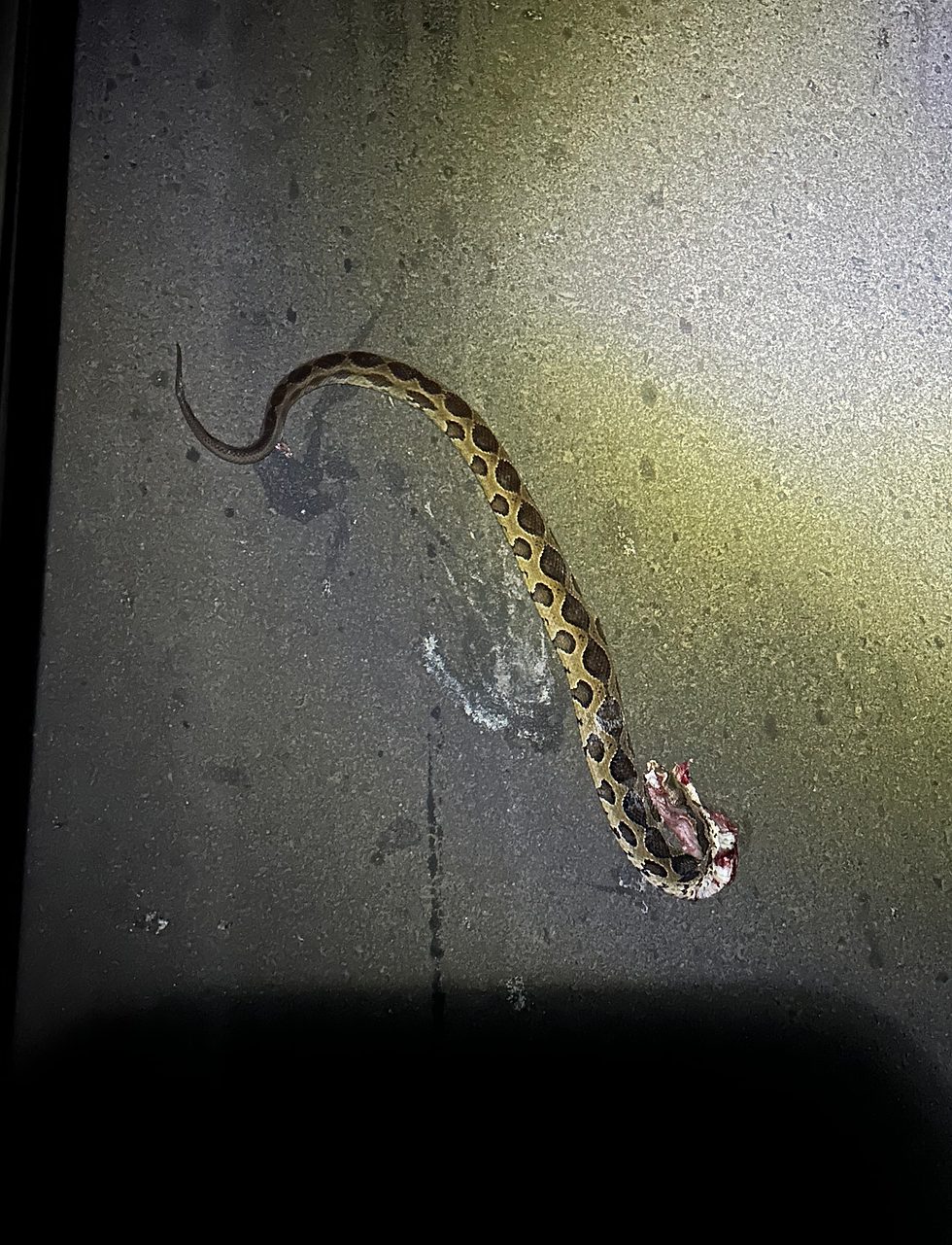
Across several village roads, particularly those experiencing moderate to high vehicular movement, these small cats were repeatedly recorded scavenging on roadkill. Instead of investing energy in active hunting, individuals capitalized on an abundant and predictable food source, animals unintentionally killed by vehicles. These road kills ranged widely and included reptiles such as snakes and lizards, small mammals like rodents, ground dwelling birds, and even large insects.
What stands out is the consistency of this behavior. Certain road stretches were repeatedly used, suggesting that these cats may be incorporating roads into their foraging routes. Activity was largely concentrated within the survey window of 9 pm to 11 pm, indicating a possible alignment with reduced human disturbance while still accessing freshly available carcasses.

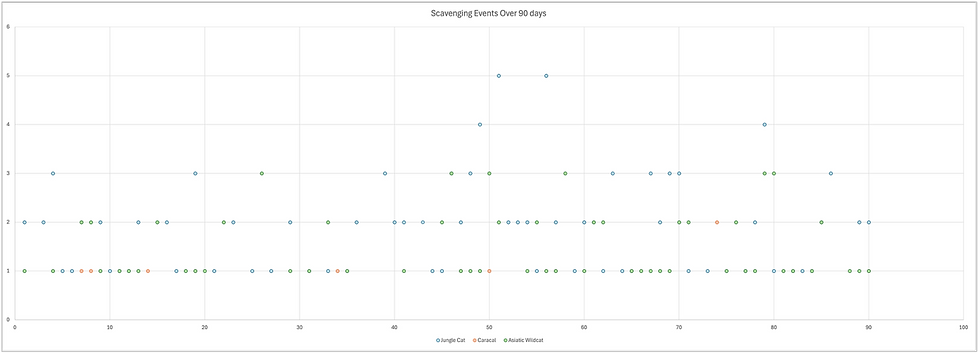
This rough trend reflects increasing reliance or detection of scavenging behavior over time, with Jungle cats showing the highest frequency, followed by Asiatic wildcats and then caracals.
For conservation, these findings highlight an important dual reality. Roadkill mitigation becomes essential not only to reduce direct mortality but also to prevent reinforcing risky behavior. At the same time, such behavioral flexibility shows that these species are actively adjusting to survive in changing landscapes.
In Kachchh, roads are no longer just pathways for human movement. They have become part of the ecological fabric. And within this altered system, these small wild cats continue to adapt, quietly redefining survival in a human dominated world.
From an energetic perspective, this strategy is highly efficient. Hunting requires time, stealth, and often multiple failed attempts before a successful capture. Scavenging offers immediate energy gain with minimal effort. In landscapes where prey availability fluctuates due to seasonal or human driven changes, this behavior can act as a buffer against food scarcity.
However, this adaptation comes with risks. Frequent use of roads increases the likelihood of vehicle collisions, especially for species like the caracal that already exist at low densities. What provides food also creates vulnerability, making roads both resource zones and potential ecological traps.
Ecologically, this behavior reflects a broader pattern of wildlife adapting to human altered environments. What is particularly notable in Kachchh is that multiple small felid species appear to be adopting similar strategies within the same landscape. This raises important questions about competition, overlap in resource use, and whether traditional hunting behaviours are being reduced over time.
Below is a simple representation of relative scavenging observations recorded during the study period across three species over multiple survey nights;